Colic is one of the most common surgical emergencies in the horse, and success revolves around a highly trained rapid response team.
Colic describes the symptoms of abdominal pain. Some of the most commonly observed symptoms in horses are flank watching, scraping at the ground, rolling, frequently lying down and sweating. There are many causes of colic – from simple spasmodic colic, gassy colic, or more severe causes such as intestinal displacements or strangulations.
Many causes of colic can be successfully treated medically – without surgery. This includes spasmodic colic, impactions, gassy colics, and intestinal displacements. Drugs to relax the intestinal smooth muscles help relieve spasm and improve comfort. Impaction colic can be treated with oral fluids and laxatives, often in combination with intravenous fluids. When there is a displacement, part of the intestine can ‘kink’, reducing the flow of feed and gas along the intestinal tract. This can then lead to secondary gas distension or impactions. Horses often become dehydrated, compounding the problem due to associated reductions in intestinal motility. Treatment with combinations of pain relief, intravenous fluid therapy and regular walking exercise promote motility, and this in turn can result in resolution of the distension and allow correction of the intestinal displacement.
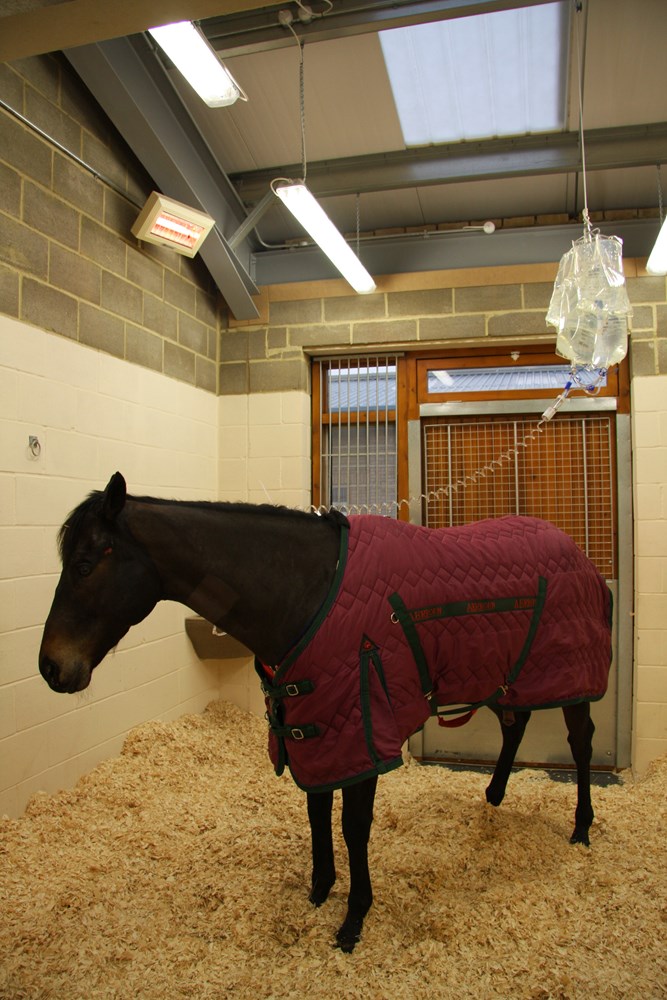
Strangulation of part of the intestines represents an acute surgical emergency. This can occur due to twists in the intestines, entrapments through small holes (for example tears in the normal suspending mesenteric sheets, or through the epiploic foramen), or by pedunculated fatty tumours (lipomas). Rapid surgical relief may allow reperfusion and survival of the affected part of the intestines, but if the strangulation has resulted in severe damage then removal is required. Horses that have suffered a strangulation of their intestine are often critically ill, due to secondary effects of toxin absorption through the damaged intestine. Intensive care is required after surgery in these patients.
BVSc PhD DipECVS DipECEIM FRCVS
BVetMed Dipl. ECVS DEO MRCVS European and RCVS Specialist in Equine Surgery
Our hospital veterinary surgeons are consultants in their field, holding specialist qualifications endorsed with extensive clinical experience.
Hayley graduated from Liverpool University Veterinary School in 2011. She then worked in mixed general practice as an equine ambulatory vet for a number of years before commencing an equine internal medicine Fellowship in the USA. Having completed this, she undertook a 3-year Residency Programme and became an ACVIM Diplomate shortly before joining NEH in 2019. She has lectured internationally and published in peer reviewed publications.
Matt is a 2001 graduate of the Royal Veterinary College. After graduation he completed an internship at Greenwood Ellis and Partners, before returning to the RVC where he undertook his residency in Equine Surgery. He became a Diplomat of the European College of Veterinary Surgeons in 2007, and has been recognised by the RCVS as a specialist in Equine Surgery since 2008. Matt undertook additional studies resulting in passing the RCVS Diploma in Equine Orthopaedics in 2011. His thesis was on clinical applications of endoscopic techniques in orthopaedic surgery.
Since 2006 Matt has worked as a surgeon at Newmarket Equine Hospital, and in 2021 took on the role of hospital director. He is interested in all areas of equine surgery, but with particular emphasis on orthopaedic surgery, and more specifically arthroscopy and fracture repair.
BVetMed Dipl. ECVS DEO MRCVS European and RCVS Specialist in Equine Surgery
Will returned to the Newmarket Equine Hospital on completion of his surgical residency to join the referrals team and specialise in equine surgery. In February 2014 Will successfully passed the qualifying examinations of the European College of Veterinary Surgeons, becoming a Diplomate of the college and gaining recognition as a European Specialist in Equine Surgery.
Will has published several papers in peer reviewed scientific journals and presented both nationally and internationally, on subjects including soft tissue injuries to the tarsocrural joint and sinus surgery.
Prior to embarking on his veterinary career Will was a keen event rider, unfortunately Will no longer competes but still finds time to ride.
Matt graduated from Nottingham University Veterinary School in 2011. He then undertook an internship before spending 4 years as an ambulatory vet in a busy equine hospital in Yorkshire. Following this, he completed a surgical Residency at the Royal Veterinary College where he developed a keen interest in both soft tissue and orthopaedic surgery. He joined NEH in 2019. In February 2020 Matt successfully passed the qualifying examinations of the European College of Veterinary Surgeons, becoming a Diplomate of the College and a European Specialist in Equine Surgery.
Our Practices
Our Practices
BVSc MRCVS
Jess graduated from the University of Liverpool in 2025 and joined NEH shortly afterwards. Jess is very excited to continue her training at NEH and has a particular interest in surgery and sports medicine.
BSc VetMB MRCVS
Jeremy qualified as a vet in 1998 from Cambridge University having previously done a degree in Animal Science at Nottingham University.
He enjoys all aspects of equine practice, especially sport and leisure horse veterinary work and equine dentistry. He is normally accompanied by his trusty canine companion, Ricky (from Romania) while out on his visit rounds.
He is a keen polo player in his spare time and loves breeding and training young ponies.